
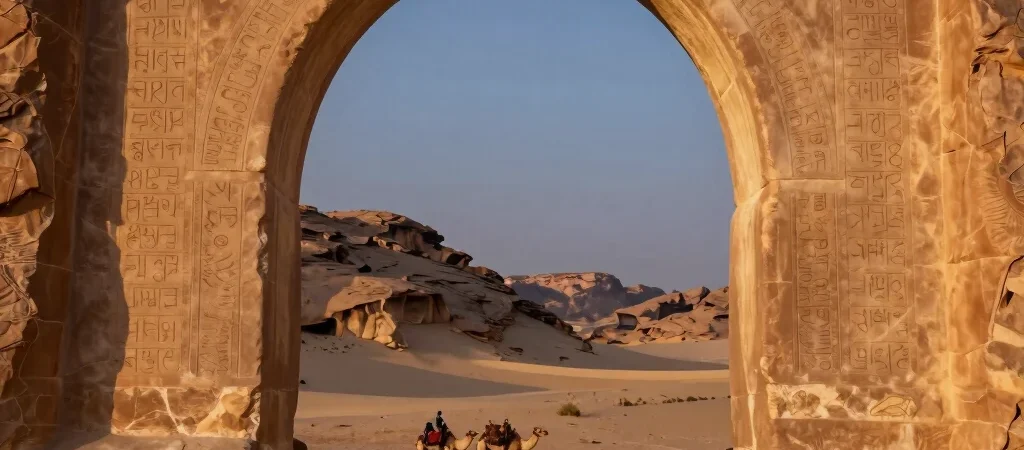
In the first century AD, the trade arteries connecting Gandhara with Parthia and the Levant were far more than channels for commerce. They served as vital neural pathways where philosophy, language, and spiritual enquiry traveled alongside Silk Road commodities. Scholars and merchants shared desert camps, exchanging worldviews under the same canopy of stars.
The Crossroads of Mountain and Desert
Takshasila sat at a unique geographic pivot where northern mountain passes opened into fertile plains. Travellers arriving from Middle Eastern kingdoms encountered a bustling intellectual hub filled with stupas, monasteries, and academies. The sheer diversity of languages spoken along these routes enabled unexpected cross-cultural dialogues that shaped early regional theology.
Goods as Vessels for Sacred Thought
Every shipment of aromatic resins, indigo, or carved ivory carried human custodians with deep spiritual traditions. As messengers navigated royal road networks, monastic communities offered sanctuary and dialogue to weary travellers. These quiet encounters laid the groundwork for a profound synthesis of Eastern and Western Mediterranean thought.
Bridging Two Ancient Worldviews
Understanding this network requires looking beyond mere political alliances to see the shared human longing for meaning. Our cinematic project grounds its narrative in these recorded exchanges, honoring the real historical context while giving voice to forgotten pilgrims. Through careful atmospheric storytelling, we illuminate a era when distance could not dim intellectual curiosity.